
 English
- All
- Product Name
- Product Keyword
- Product Model
- Product Summary
- Product Description
- Multi Field Search
English Author: Site Editor Publish Time: 2025-10-21 Origin: Site


Imagine standing in your workshop, ready to tackle a new project. You want results that last, so you need the right ARC welding machine. Matching its features to your materials, project size, and budget helps you weld with confidence. When you pick wisely, you gain versatility for different jobs, reliable strength, and cost-effective solutions. You also enjoy portability and adaptability, letting you work almost anywhere. Strong welds and easy repairs become part of your routine.
Identify your materials and their thickness before choosing a welding machine. This ensures strong, lasting welds tailored to your project.
Consider how often you will use the machine. For frequent use, invest in a durable, industrial-grade model to avoid performance issues.
Evaluate your work environment. Proper ventilation and temperature control can significantly impact the quality of your welds.
Choose the right type of welding method based on your needs. Stick, TIG, and MIG each have unique advantages for different projects.
Set a realistic budget that includes not just the machine cost but also consumables and maintenance for long-term success.
Choosing the right ARC welding machine starts with knowing your materials. Each metal demands a specific approach. You want to match your machine to the job for strong, lasting welds. The table below shows common materials, their uses, and the best welding methods for each:
Material Type | Applications | Welding Methods |
Mild Steel | Structural frameworks, automotive parts, etc. | SMAW, MIG |
Stainless Steel | Food processing, marine parts, etc. | TIG, MIG |
Cast Iron | Engine blocks, machine bases, etc. | Preheat and nickel-based electrodes |
Aluminium | Aerospace structures, automotive frames, etc. | TIG, MIG with AC |
Titanium | Aerospace, marine engineering, etc. | TIG with shielding gas |
Copper and Alloys | Electrical wiring, plumbing, etc. | TIG, MIG |
Nickel Alloys | Power plants, chemical refineries, etc. | TIG, MIG |
Magnesium | Aerospace parts, electronics casings, etc. | Laser, resistance spot welding |
Tungsten | Aerospace, nuclear facilities, etc. | TIG, plasma arc welding |
Material thickness also plays a big role. Thin metals need precise heat control. TIG welding works best here because it prevents warping and burn-through. For thick materials, you need deep penetration. Stick or flux-cored arc welding delivers the power required for these jobs. Always check your ARC welding machine’s capabilities before starting. This step ensures you get clean, strong welds every time.
You must consider how often and how much you plan to weld. Occasional repairs at home require a different machine than daily use in a busy shop. If you use your ARC welding machine frequently, you put more stress on it. Machines that work hard every day lose performance and wear out faster.
Frequent use leads to faster performance decline and shorter lifespan.
Heavy workloads can cause overheating and early failure.
High-production settings demand machines built for durability and reliability.
For regular, heavy-duty projects, invest in a robust, industrial-grade ARC welding machine. This choice saves you money and frustration in the long run. For light, occasional work, a compact, entry-level model may suit your needs and budget.
Your workspace affects your welding results. You want to protect yourself and your equipment from hazards. Air quality matters.
Using a comprehensive fume extraction system for your welding operations is one of the most impactful things you can do to avoid releasing contaminants.
Switching to eco-friendly materials and water-based fluxes also helps reduce harmful fumes and waste. Modern ARC welding machines offer better energy efficiency, so you save on power bills and help the environment.
Temperature and humidity also influence your welds. High humidity, especially above 70%, increases porosity and weakens joints. Bubbles form in the weld pool, which lowers the strength of your finished product. Always monitor your environment and adjust your process for the best results.
By matching your ARC welding machine to your materials, workload, and workspace, you set yourself up for success. You get better welds, safer conditions, and more value from your investment.

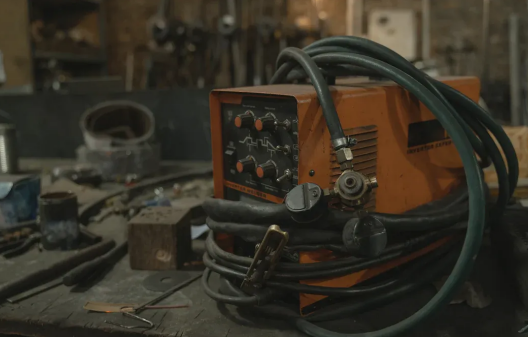
Choosing the right ARC welding machine means understanding the strengths and best uses of each type. You want to match your machine to your projects for the best results. Let’s break down the main types and help you decide which one fits your needs.
Stick welding, or Shielded Metal Arc Welding (SMAW), stands out for its ruggedness and flexibility. You can use it almost anywhere—outdoors, indoors, in tight spaces, or even in less-than-ideal weather. This method works well for heavy-duty repairs, construction, and farm equipment.
Here’s a quick look at the main advantages and limitations:
Advantages of Stick Welding | Limitations of Stick Welding |
Effective in windy or rainy conditions | Slower compared to other welding methods |
Inexpensive equipment | More complicated process requiring skilled welders |
No need for external shielding gas | Time-consuming to remove slag |
Less sensitive to surface contaminants | Difficult to weld thinner metals |
Easy to change rods for different metals | Frequent replacement of welding rods |
Ground clamp can be placed far from the weld | Excessive spatter and rough surfaces |
Tip: If you need to weld outdoors or on dirty, rusty metal, stick welding gives you reliable results. You don’t need to worry about wind blowing away shielding gas.
You should consider stick welding if you want a portable, affordable ARC welding machine for general repairs or heavy steel work. However, if you plan to weld thin metals or want a cleaner finish, you may want to look at other options.
TIG welding, or Gas Tungsten Arc Welding (GTAW), gives you unmatched control and precision. You can create beautiful, clean welds with almost no spatter. This method is perfect for projects that demand a flawless finish and strong joints.
Industry | Application Description |
Aerospace | Precision and strength in components |
Art objects and metal sculptures | Creation of intricate designs and structures |
Automobile industry | Common repairs, such as fender work |
Medical and scientific equipment | Manufacturing of precise instruments |
TIG welding shines when you work with thin metals or need a weld that looks as good as it performs. You get exceptional control over heat and weld quality, making it ideal for aerospace, automotive, and fine metalwork. You can also use it on a wide range of metals, including aluminum, stainless steel, and titanium.
TIG welding produces strong, high-quality welds with a clean, ripple-free finish. If you want your work to stand out for both strength and appearance, TIG is your best choice.
Keep in mind, TIG welding requires more skill and patience. The equipment can cost more, and the process is slower than stick or MIG welding. If you value precision and finish, though, you will find the investment worthwhile.
MIG welding, or Gas Metal Arc Welding (GMAW), offers speed and simplicity. You feed a continuous wire through the gun, so you can weld quickly and efficiently. This method is popular in automotive shops, manufacturing, and large-scale production.
Benefit | Description |
Speed and Efficiency | MIG welding is faster than stick welding due to continuous wire feed, leading to lower production costs and quicker turnaround times. |
Versatility | It can be used on various metals and thicknesses, making it adaptable for diverse projects in industries like automotive and construction. |
Ease of Use | Easier to learn than TIG welding, allowing welders to focus on guiding the torch, reducing errors and training time. |
Strong, Reliable Joints | Produces clean, consistent welds suitable for structural applications, ensuring strength in metal assemblies. |
Minimal Post-Weld Cleaning | Generates less spatter compared to stick welding, resulting in reduced cleaning time and faster production cycles. |
You should choose MIG welding if you want to maximize productivity and minimize cleanup. This method is easy to learn, so you can get started quickly. You can use it on a variety of metals and thicknesses, making it a versatile choice for many projects.
MIG welding helps you finish jobs faster and with less effort. If you need an ARC welding machine for frequent or large-scale work, MIG is a smart investment.
The power source you choose—AC, DC, or AC/DC—directly affects your welding results. Each type has unique benefits for different metals and applications.
Welding Type | Best For | Reason |
AC | Aluminum | High-intensity heat and cleaning action to remove surface oxides |
DC | Steel | Provides a stable arc and smoother welds, ideal for thinner metals |
AC/DC | Versatile | Allows switching between AC and DC based on material requirements |
AC welding is essential for aluminum and other non-ferrous metals. The alternating current cleans the metal surface, giving you a stronger, cleaner weld. You will find AC welding especially useful in shipbuilding, automotive, and aerospace work.
DC welding gives you a stable arc and smooth welds, making it perfect for steel and thin metals. You get less spatter and better control.
AC/DC machines give you the flexibility to switch between modes. You can tackle a wider range of projects and materials with one ARC welding machine.
If you want to weld both steel and aluminum, invest in an AC/DC ARC welding machine. You will save time and money by handling more jobs with a single tool.
Choosing the right type of ARC welding machine ensures you get the best results for your materials and projects. You gain more control, better weld quality, and the ability to take on new challenges with confidence.
You want strong welds every time. Matching amperage to material thickness is the key. If you use too little amperage, your welds lack penetration and strength. Too much amperage can burn through the metal and ruin your project. As a rule of thumb, each .001 inch of material thickness needs about 1 amp of output. Thicker metals require higher amperage settings for deep, secure welds.
Thin metals need lower amperage for precise control.
Thick metals demand higher amperage for proper fusion.
Check the chart below to see the minimum and maximum amperage requirements for common welding electrodes by diameter:
Electrode Diameter (in.) | 6010, 6011 | 6012 | 6013 | 7014 | 7018 | 7024, 7028 |
1/16 | N/A | 20-40 | 20-40 | N/A | N/A | N/A |
3/32 | 40-80 | 35-85 | 45-90 | 80-125 | 70-100 | 100-145 |
1/8 | 75-125 | 80-140 | 80-130 | 110-160 | 100-150 | 140-190 |
1/4 | 210-320 | 250-350 | 275-375 | 300-390 | 315-400 | 335-430 |
5/16 | 275-425 | 320-430 | 340-450 | 375-475 | 390-500 | 400-525 |
Your power supply determines where and how you use your ARC welding machine. Residential settings usually offer lower voltage, so inverter-based systems work best. Industrial environments provide high-voltage outlets, making transformer-based systems ideal for heavy-duty jobs. Most home welders use single-phase power, while factories rely on three-phase for bigger workloads.
Power Supply Type | Residential Compatibility | Industrial Compatibility |
Transformer-based | Limited (lower voltage) | High (high-voltage) |
Inverter-based | Good (portable options) | Excellent (versatile) |
Single-phase | Common (120/240V) | Rare (3-phase preferred) |
3-phase | Not applicable | Common (for heavy loads) |
Voltage fluctuations can ruin your welds. You may see excessive spatter, poor fusion, or incomplete penetration. Consistent voltage keeps your welds strong and reduces the need for constant adjustments.
Duty cycle measures how long you can weld before your machine needs a break. If you exceed the recommended duty cycle, you risk overheating and damaging your equipment. Machines with thermal overload protection help prevent fires and failures. Pushing your welder too hard shortens its lifespan and lowers weld quality.
Exceeding the duty cycle triggers thermal overload and shortens machine life.
Continuous operation beyond the duty cycle wears out internal parts.
Avoiding excessive duty cycle usage leads to better welds and longer equipment life.
Choose a machine with a duty cycle that matches your workload. You protect your investment and ensure safe, efficient welding.

You want a welding machine that fits your lifestyle. If you move between job sites or work in tight spaces, portability matters. Lightweight models with sturdy handles or wheels make transport easy. Compact designs let you store your machine without hassle. Choose a model that matches your need for mobility, especially if you work in varied locations.
Modern machines offer features that boost your productivity and accuracy. User surveys show that welders value digital displays, continuous control knobs, and intuitive interfaces. These features help you fine-tune settings and work efficiently.
Feature | Description |
User-Friendly Features | Digital displays, continuous control knobs, and intuitive interfaces contribute to ease of use and fine-tune adjustments. |
Digital controls take your welding to the next level. You get real-time monitoring and precise adjustments, which means fewer mistakes and consistent weld quality. These controls also help you save on gas and reduce emissions, making your work more sustainable. Durable welds mean fewer replacements and less waste.
You need easy access to consumables like electrodes and gas equipment. Keeping these supplies in good condition ensures your ARC welding machine performs well and lasts longer.
Regularly check and replace electrodes and gas equipment.
Stock up on consumables to avoid project delays.
Choose a machine with widely available parts.
Your safety comes first. Look for machines that support essential protective gear and safety practices.
Use a welding helmet, gloves, and flame-resistant clothing.
Wear steel-toed boots and safety glasses.
Ensure proper ventilation and electrical grounding.
Keep your workspace clear of flammable materials.
Always have a first aid kit nearby and know emergency procedures.
Stay alert and follow safety training. The right habits and equipment reduce accidents and keep you working confidently.
Set a realistic budget before you buy. Consider not just the upfront cost but also long-term expenses like consumables and maintenance. Investing in quality features and safety pays off with better results and fewer repairs. Choose a machine that meets your needs without overspending.
You want the best results from your welding projects. Focus on your project needs, choose the right machine type, and check power compatibility. Look for portability and features that match your workflow. Set a budget that covers quality and safety. Before you buy an ARC welding machine, research models or talk to an expert. The right choice boosts safety and helps you achieve strong, reliable welds every time.
Ready to upgrade your welding experience? Take action now and invest in your success!
You should start with a MIG or stick welder. These machines offer easy setup and simple controls. You can learn quickly and get strong results. Choose a model with clear instructions and safety features.
Check your outlet voltage and compare it to the machine’s requirements. Most home welders use 120V or 240V. Industrial models may need three-phase power. Always match the machine to your available power source.
Yes, you can. Select an AC/DC machine with adjustable settings. You can weld steel, aluminum, and stainless steel. Use the right electrodes or wire for each metal. This flexibility saves you money and space.
Duty cycle matters if you weld for long periods. A higher duty cycle lets you work longer without overheating. For short repairs, a lower duty cycle works fine. For big jobs, invest in a machine with a higher rating.
Tip: Always let your machine cool down after heavy use. This habit extends its life and keeps you safe.


